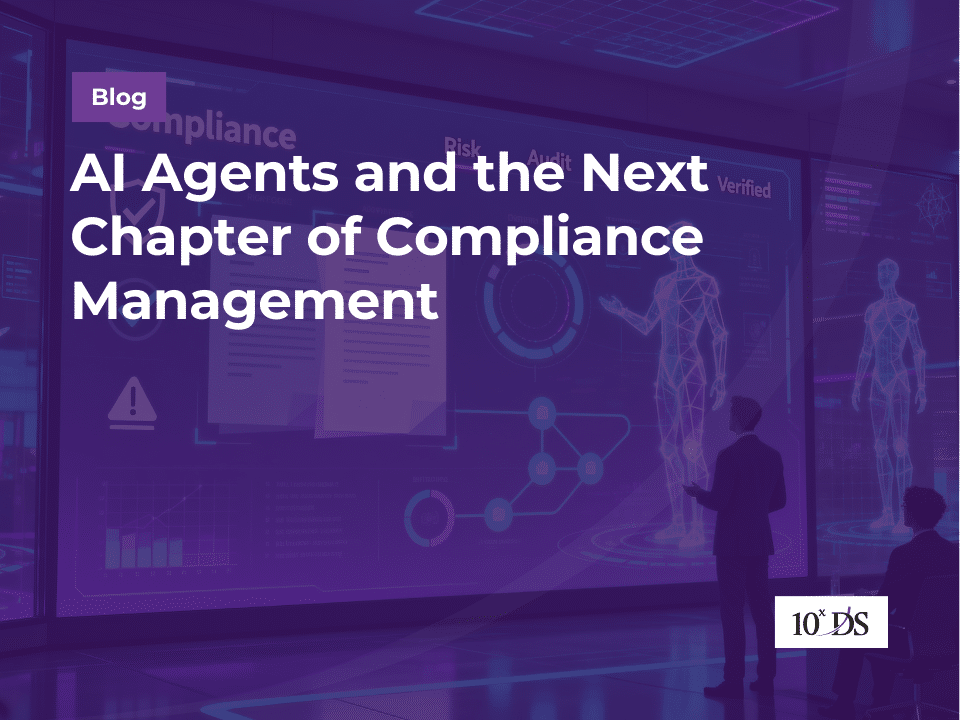
AI Agents and the Next Chapter of Compliance Management
In today’s complex and rapidly evolving regulatory landscape, organizations across every sector face immense pressure to maintain compliance. From finance and healthcare to manufacturing and retail, the sheer volume and dynamic nature of regulations such as General Data Protection Regulation (GDPR), Health Insurance Portability and Accountability Act (HIPAA), Sarbanes–Oxley Act (SOX), and Payment Card Industry Data Security Standard (PCI-DSS) make traditional, manual compliance methods increasingly unsustainable. These legacy approaches are often fragmented, reactive, and prone to human error, leading to significant financial penalties, reputational damage, and operational inefficiencies. However, a profound shift is underway with the advent of intelligent autonomous systems. Enter the era of AI Agents for Compliance, intelligent software modules designed to revolutionize how businesses approach regulatory assurance and risk management.
The Evolution from Manual Checks to Intelligent Monitoring
Historically, compliance monitoring has been a laborious, manual process. Teams of dedicated analysts would painstakingly review mountains of data—spreadsheets, emails, transaction logs—to identify potential irregularities or violations. This reactive stance meant that issues were often detected only after they had occurred, leading to a scramble for remediation. Such methods were not only time-consuming and expensive but also inconsistent and limited in scope. The growing “data deluge” further aggravates these challenges, overwhelming traditional Governance, Risk, and Compliance (GRC) platforms that struggle to keep pace with the scale and speed required for effective oversight.
The imperative for change is clear. The penalties for non-compliance can be catastrophic, ranging from multi-million dollar fines and consent orders to criminal prosecution and severe damage to a company’s brand and customer trust. Boards and stakeholders demand assurance that controls are robust and effective, yet manual testing often falls short, failing to provide real-time confidence. This is where AI Agents for Compliance emerge as a game-changer, offering a proactive and intelligent safety net for enterprises navigating the regulatory labyrinth.
Understanding AI Agents for Compliance
At its core, an AI Agent for Compliance is an advanced software entity powered by artificial intelligence, engineered to autonomously monitor, analyse, and enforce regulatory policies across an organization’s digital ecosystem. These agents are not merely rule-based systems; they are sophisticated, adaptive entities capable of understanding context, learning from data, and making informed decisions. They perform a variety of critical functions, including extracting and interpreting data from diverse sources like logs, documents, and communication platforms. They can flag policy violations or suspicious anomalies in real-time, connect with external regulatory Application Programming Interface (API) systems for immediate updates on evolving frameworks, and generate transparent, explainable audit reports. Furthermore, these intelligent agents can orchestrate remediation tasks or trigger alerts to relevant human teams, ensuring a continuous loop of compliance and audit readiness.
The market for AI agents is experiencing significant growth, reflecting this transformative potential. The statistics highlight a clear movement away from experimentation towards full-fledged pilot programs and broader deployment, indicating strong executive confidence in autonomous AI solutions across diverse industries.
The Blueprint for an AI-Powered Compliance Framework
An effective AI-powered compliance system is typically built as a modular, intelligent pipeline where specialized agents collaborate within a cohesive orchestration layer. This full-stack approach ensures comprehensive coverage and dynamic response capabilities:
- Data Ingestion Agents: These agents are responsible for collecting vast amounts of structured and unstructured data from various enterprise systems, including databases, email platforms, internal tools like Customer Relationship Management (CRM) systems, and logs.
- Policy Interpretation Agents: Leveraging advanced Natural Language Processing (NLP) and Retrieval-Augmented Generation (RAG) models, these agents interpret complex policy documents and regulatory texts. They map ingested data against current compliance requirements, ensuring that the system understands the nuances of legal and internal guidelines.
- Violation Detection Agents: These are the vigilant watchdogs of the system. They continuously scan for anomalies, breaches, or rule violations, such as unauthorized data access, improper financial transactions, or unapproved contractual language. Their real-time capabilities are crucial for immediate threat detection.
- Audit Trail Agents: To ensure transparency and accountability, these agents meticulously log every decision, input, and output within the system. This provides a fully explainable and traceable decision log, which is invaluable for regulatory examinations and internal reviews.
- Alert and Action Agents: Upon detection of a violation, these agents initiate appropriate responses. This could range from escalating the issue to legal, IT, or compliance teams, to triggering automated remediation workflows designed to rectify the non-compliant action promptly.
This integrated architecture enables robust Compliance Monitoring AI Agents that operate continuously, adapting to new regulations and organizational changes with agility.
Strategic Advantages of AI in Compliance Monitoring
The adoption of AI Agents for Compliance offers compelling benefits that transform compliance from a burdensome cost centre into a strategic asset. The advantages include:
- Real-Time Enforcement: Unlike periodic manual audits, AI agents provide 24/7 continuous monitoring, enabling instant detection and response to non-compliant activities.
- Unmatched Scalability: As businesses grow and regulatory complexities increase across multiple jurisdictions, AI agents can effortlessly scale to cover more systems and data volumes without a proportional increase in headcount.
- Enhanced Explainability: Every action taken by an AI agent is backed by a traceable decision log, providing clarity on how and why a particular flag or action was triggered. This is critical for regulatory scrutiny.
- Proactive Adaptability: Through mechanisms like RAG-connected agents that ingest live feeds from external regulation APIs, these systems can dynamically update their rulebooks as laws evolve, ensuring continuous adherence.
- Improved Security and Data Privacy: Many AI compliance solutions offer private deployment options, allowing organizations to host agents within their own virtual private clouds or on-premises infrastructure, maintaining full control over sensitive compliance data.
A recent PwC survey (2025) found that 73% of senior executives believe their organization’s use of AI agents will deliver a significant competitive advantage within the next 12 months, reflecting growing enterprise confidence in agent-driven strategies. This confidence is fuelled by tangible value, as more than half of companies are actively using or planning to use agents across critical functions like customer service, sales and marketing, and IT and cybersecurity.
Real-World Applications of Compliance Monitoring AI Agents
The versatility of AI Agents for Compliance makes them invaluable across a diverse range of industries:
- Financial Services: In banking and fintech, AI agents are indispensable for enforcing anti-money laundering (AML) policies, detecting insider trading, and auditing customer communications. They can monitor trading desk messages for suspicious keywords, track complex transaction flows for fraud indicators, and automatically flag activities for Suspicious Activity Reports (SARs), reducing false positives in some cases. This redefines risk management, allowing compliance officers to become more strategic.
- Healthcare: For hospitals and healthcare providers, maintaining HIPAA compliance is paramount. AI agents can meticulously track access logs to Protected Health Information (PHI), identifying unauthorized access patterns. They can also scan outgoing faxes and emails to prevent PHI breaches before transmission, bolstering data privacy and patient trust.
- Insurance: In the insurance sector, AI agents are deployed to cross-reference claims against policy terms and regulatory disclosures. For instance, an agent can flag an insurance agent modifying claim settlement amounts outside permitted thresholds without proper approval, initiating an internal investigation workflow.
- Retail and E-commerce: Ensuring adherence to data privacy regulations like California Consumer Privacy Act (CCPA) and GDPR is crucial for retailers. AI agents can scan marketing emails and checkout processes to verify compliance with opt-in consent rules, alerting marketing teams to any regional variations or missed requirements.
- Manufacturing: In advanced manufacturing facilities, Compliance Monitoring AI Agents are integral to quality control and regulatory adherence. They continuously analyse data from IoT sensors, robotic operations, and environmental controls to predict potential quality control issues or safety violations, shifting compliance from reactive to proactive. This leads to continuous improvement and process optimization, making compliance a driver of innovation.
The Future Landscape of Regulatory Assurance
The trajectory towards AI-powered compliance is clear and accelerating. AI Agents for Compliance represent a fundamental shift, transforming compliance from a necessary, often reactive, burden into a proactive, intelligent, and strategic advantage. As regulatory frameworks become increasingly intricate and data volumes continue to expand exponentially, AI-powered compliance monitoring will transition from a competitive edge to an absolute necessity for businesses striving to thrive in the modern regulatory environment.
The integration of advanced regulatory compliance automation with sophisticated business intelligence capabilities empowers organizations not only to maintain the highest compliance standards but also to derive valuable insights for strategic decision-making and risk mitigation. This future envisions a landscape where compliance is not merely about avoiding penalties but about fostering operational excellence, identifying new opportunities, and building unwavering trust with regulators and customers alike. The transformative potential of AI agents in shaping a more dynamic and effective regulatory environment is truly exciting.